Disclosure: This page may contain affiliate links. I may earn a commission at no extra cost to you if you purchase through one of these links.
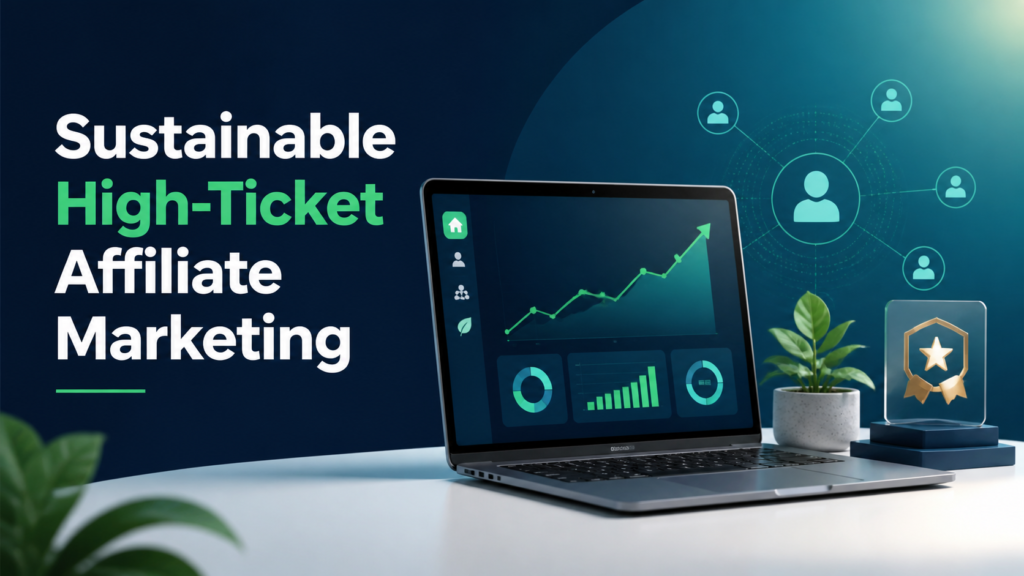
Learning How to Build a Sustainable Online Business involves more than choosing a product and posting affiliate links. You need a defined audience, a useful offer, reliable traffic sources, a lead-capture system, and a process you can maintain without exhausting yourself. High-ticket affiliate marketing can fit this model, but it is not a shortcut to guaranteed traffic or income. The goal is to create digital assets and automated systems that continue working when you are offline.
Affiliate disclosure: This article contains an affiliate link. If you purchase through it, the publisher may receive a commission at no additional cost to you.
What Makes an Online Business Sustainable?
A sustainable online business can consistently serve its audience without depending on nonstop manual effort. It uses repeatable processes rather than isolated promotions, unpredictable posting, or constant product switching.
For an affiliate marketer, the core system usually includes an audience problem, a relevant offer, educational content, a way to collect leads, and follow-up communication. Each part supports the others.
Sustainability also means setting realistic expectations. A website, video, guide, or email sequence can be available 24/7, but that does not mean it will automatically generate leads every hour. Results depend on demand, traffic quality, positioning, trust, conversion rates, competition, and execution.
Build Assets Instead of Chasing Activity
Short-term promotional posts can disappear from view quickly. Evergreen assets have a longer useful life. Examples include comparison articles, tutorials, buyer guides, frequently asked question pages, email sequences, checklists, and recorded demonstrations.
These assets require work upfront, but they can reduce the need to start from zero each day. That is the foundation of a business that may eventually require less daily maintenance. Launch Stack Ai Review: A Practical Guide for Smarter Online Launches
Choose a Specific Audience and Problem
Broad positioning creates vague content. Instead of trying to help everyone who wants to make money online, choose a more focused group and challenge.
For example, you might serve service providers who want to add an affiliate revenue stream, beginners who need a simple content system, or small business owners looking for better lead follow-up. A specific audience makes it easier to select offers and create relevant messages.
Create a One-Sentence Positioning Statement
Use this simple structure: “I help [audience] solve [problem] through [method].”
An example would be: “I help time-constrained small business owners build simple affiliate funnels through practical content and email automation.” This statement does not promise an outcome. It simply tells visitors who the business serves and how it helps.
Select Offers with Long-Term Value
High-ticket affiliate offers may pay a larger commission per sale than low-cost products. However, commission size should not be your only selection criterion. The product must be relevant to your audience, clearly explained, and supported by a credible sales process.
Before promoting any program, review its public materials and terms. Confirm what customers receive, what it costs, whether ongoing fees apply, how refunds are handled, and what support is available. Do not make claims that the vendor cannot substantiate.
Questions to Ask Before Promoting an Offer
- Does the product solve a genuine problem for the intended audience?
- Can you explain who it is and is not suitable for?
- Are the pricing, refund terms, and customer responsibilities clear?
- Does the sales message rely heavily on exceptional income examples?
- Would the offer still be useful if the buyer achieved modest rather than dramatic results?
- Can you create substantial educational content around the underlying problem?
This evaluation is especially important for business education programs. Training can provide direction, but each participant remains responsible for implementation, expenses, legal compliance, and results.
Build a Simple Lead Generation Funnel
A sustainable funnel does not need dozens of pages. Beginners can start with a focused four-part structure: a useful piece of content, a lead magnet, an opt-in page, and an email follow-up sequence.
- Publish educational content: Answer a specific question your target audience is already asking.
- Offer a relevant resource: Create a checklist, worksheet, template, or short guide that helps the reader take the next step.
- Collect permission: Use an opt-in form that explains what subscribers will receive.
- Follow up: Send useful emails that educate readers, address common objections, and introduce suitable affiliate offers.
A Practical Funnel Example
Imagine that your audience consists of consultants interested in affiliate marketing. You could publish an article about choosing an offer that matches an existing service. The article could invite readers to download an “Affiliate Offer Evaluation Checklist.”
After subscribing, the reader could receive a short email series covering audience research, offer selection, content planning, disclosure requirements, and funnel measurement. A relevant training program can then be presented as an optional next step rather than an automatic solution.
This funnel can accept visitors and collect leads at any time. However, it will still need qualified traffic, testing, maintenance, and accurate tracking.
Create Evergreen Content That Supports Decisions
Effective affiliate content should help readers make informed choices. Publishing only promotional reviews can limit trust and make traffic dependent on people who are already close to buying.
Create content for different stages of the decision process:
- Awareness: Explain the problem and common approaches.
- Consideration: Compare methods, tools, costs, and trade-offs.
- Decision: Review a relevant product, answer objections, and identify the right user.
- Implementation: Help customers use what they selected more effectively.
For example, one central guide on building an affiliate funnel could link to supporting articles about lead magnets, email sequences, content planning, affiliate disclosures, and conversion tracking. This creates a connected library rather than a collection of unrelated posts.
Use a Manageable Publishing Schedule
Consistency matters, but daily publishing is not required. A small business owner might produce one detailed article every two weeks and update one older article each month. The right schedule is one you can maintain while preserving quality.
Search visibility is never guaranteed. Content should therefore be useful beyond search engines. Repurpose key ideas into email newsletters, social posts, short videos, or community discussions without copying the same message mechanically across every channel.
Use Automation Without Losing Trust
Automation can reduce repetitive work, but it should support communication rather than impersonate genuine engagement. Email welcome sequences, scheduling tools, analytics reports, and standard operating procedures can make a business easier to manage.
A basic automated email sequence might include:
- Delivery of the promised lead magnet.
- A practical lesson related to the subscriber’s problem.
- A common mistake and a way to avoid it.
- A case-based example using hypothetical, clearly labeled numbers.
- An introduction to a relevant offer with an affiliate disclosure.
Review automated emails regularly. Links, prices, product details, and policies can change. Subscribers should also have a clear way to unsubscribe.
Can You Run the Business in 10 to 20 Minutes a Day?
Spending only 10 to 20 minutes online daily is better treated as a possible maintenance target than a realistic startup requirement. Building a website, researching customers, producing content, setting up email tools, and learning analytics generally require focused work.
Once the core assets are operating, short daily sessions may be enough for basic checks, simple replies, and reviewing key numbers. Larger tasks can be grouped into weekly or monthly work blocks. For example, you could spend 15 minutes on daily inbox and dashboard checks, then reserve two hours each week for content and optimization.
This approach is more credible than assuming the business can be built entirely through a few minutes of disconnected activity each day.
Plan for Scale Without Guesswork
A goal such as $50,000 per month should be translated into measurable inputs rather than treated as a promise. Start by understanding commission per sale, qualified leads, conversion rates, refund rates, operating costs, and the time required to support your marketing system.
For illustration, if an offer paid a hypothetical $1,000 commission, generating $50,000 in gross monthly commissions would require 50 completed, commissionable sales before expenses and adjustments. The number of visitors and leads required would depend on actual conversion data. This example is arithmetic, not an earnings projection.
Track a Small Set of Useful Metrics
- Visitors to key content and landing pages
- Opt-in rate by traffic source
- Email open and click activity
- Affiliate link clicks
- Confirmed conversions and refunds, when available
- Content and advertising costs
Review trends instead of reacting to one day of data. Change one major variable at a time so you can understand what influenced the result. If a page receives traffic but few opt-ins, test the resource or page message. If subscribers open emails but rarely click, examine offer relevance and clarity before increasing traffic.
Where High Ticket Affiliate School Flexible May Fit
A structured program may be useful if you want a framework, organized lessons, or guidance while developing your system. It should be evaluated as an educational resource rather than a guarantee of leads, sales, or a particular monthly income.
Before joining, review the current sales page carefully. Check the curriculum, price, time commitment, support model, refund policy, and any tools or advertising expenses that may be separate from enrollment. Consider whether the teaching matches your audience, budget, experience, and preferred marketing channels.
If you want to explore the current details of High Ticket Affiliate School Flexible, visit the official presentation through this affiliate link. Compare what is offered with your business plan, and make a decision based on fit rather than income aspirations alone.
Conclusion
Building a sustainable online business requires a clear audience, responsible offer selection, useful content, lead capture, email follow-up, and consistent measurement. Automation can help your assets remain available around the clock, but it cannot replace demand, trust, skill, or ongoing improvement.
Begin with one audience, one core problem, one lead magnet, and one relevant offer. Document your process, track meaningful data, and improve the weakest part of the funnel before adding more complexity. This creates a stronger route toward scalable growth while reducing burnout and unnecessary guesswork.
Frequently Asked Questions
What is a sustainable online business?
A sustainable online business uses relevant offers, useful assets, repeatable processes, and responsible financial practices. It can operate consistently without requiring the owner to recreate every marketing activity from the beginning each day.
Can an affiliate business generate leads 24/7?
A website, landing page, and automated email system can remain available 24/7. Whether they generate leads consistently depends on qualified traffic, audience demand, messaging, technical reliability, and conversion performance.
Is $50,000 per month realistic with high-ticket affiliate marketing?
It is a possible target, not a typical or guaranteed result. Reaching it would require sufficient qualified traffic, conversions, commission value, and cost control. Evaluate goals using verified data from your own business rather than promotional examples.
Can beginners manage an online business in 10 to 20 minutes daily?
Beginners will usually need more time to learn skills and build the initial assets. Short daily maintenance may become practical after content, email sequences, tracking, and operating procedures are established.
Should I join High Ticket Affiliate School Flexible?
That depends on the current curriculum, cost, support, policies, and fit with your goals. Review the official information, account for additional expenses, and do not enroll based solely on income claims or exceptional success stories.