
This post is about my own story and mentions my own book, The Mortgage Playbook. This is my own book, written and sold by me. When you buy through a link on this page, you are buying directly from the author.
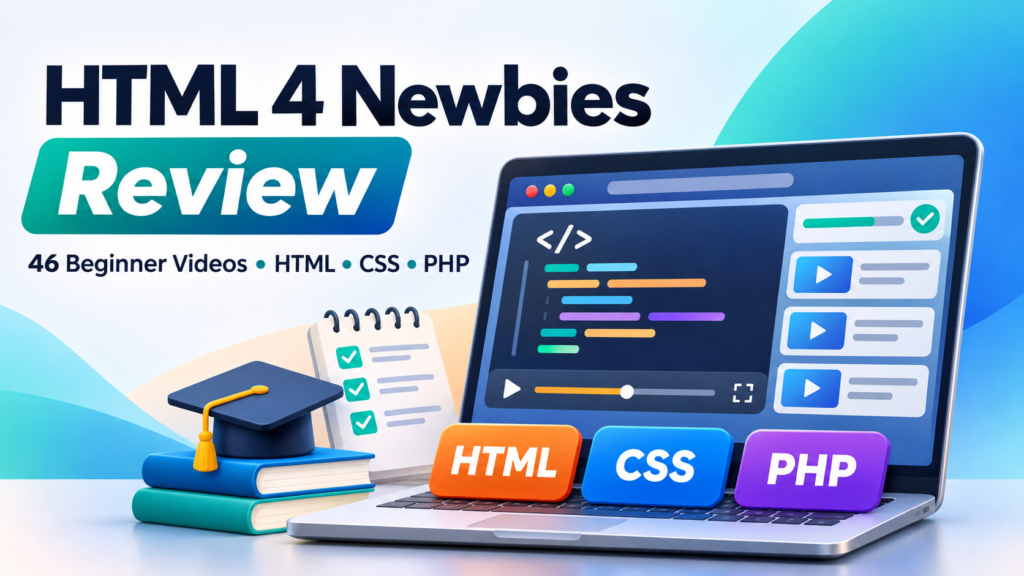
If you are searching for Get 46 ‘How To’ Videos Basic HTML, CSS & PHP coding for newbies!, you may be looking for a practical way to understand website code without enrolling in a complicated programming course. HTML 4 Newbies is a collection of 46 training videos designed to introduce marketers and beginner website owners to common HTML, CSS and PHP tasks.
Affiliate disclosure: This article contains an affiliate link. If you purchase through it, a commission may be earned at no additional cost to you. This does not affect the information or considerations shared below.
Why Basic Website Code Still Matters
Modern website builders can handle much of the technical work involved in publishing a page. However, even a visual editor may not give you complete control over every image, button, form or layout.
A small amount of coding knowledge can help when a page does not look right or a pasted element behaves unexpectedly. Instead of immediately hiring someone, you may be able to inspect the page, identify a simple issue and make a careful adjustment yourself.
This can be especially useful for affiliate marketers, email marketers, bloggers and small business owners. Common jobs include creating a landing page, formatting a sales message, adding a link, embedding a video or changing the appearance of a call-to-action button.
What Is HTML 4 Newbies?
HTML 4 Newbies is promoted as a collection of 46 “how to” videos about basic HTML, CSS and PHP. The training is positioned as newbie-friendly and created with internet marketers in mind.
The video format may appeal to people who prefer watching a task being completed rather than reading a technical reference manual. A learner can watch a lesson, pause it and repeat the demonstrated steps on a test page.
Although the product name includes “HTML 4,” it is sensible to confirm whether that refers to the branding or to the older HTML 4 specification. Most websites today use HTML5, alongside modern CSS. Before buying any coding course, check the current sales page for its lesson list, update history, software requirements, pricing and access terms. 15 *CHAMPION* List Building Methods Revealed! (2 Hour Video Course) Review and Beginner’s Guide
Understanding HTML, CSS and PHP
These three technologies have different roles. Knowing the difference makes the learning process less intimidating.
HTML provides the structure
HTML describes the content of a web page. It identifies items such as headings, paragraphs, links, images, lists and forms.
For example, a basic link can be written like this:
<a href='https://example.com'>Visit the page</a>The opening tag starts the link, the web address identifies its destination and the closing tag marks where the linked text ends.
CSS controls presentation
CSS changes how HTML elements look. It can control colors, spacing, borders, fonts and responsive layouts.
Here is a simple CSS rule for a button-style link:
.button {
  background: #2457d6;
  color: #ffffff;
  padding: 12px 18px;
  border-radius: 4px;
}
This rule does not create the link itself. It styles an HTML element that has been assigned the button class.
PHP runs on the server
PHP is different because it normally runs on a web server before the finished page reaches a visitor’s browser. It can process forms, work with databases and generate changing content.
A very small PHP example is:
<?php
  echo 'Welcome to my website';
?>
PHP requires a compatible server environment. Beginners should not place passwords, payment information or secret API keys in public files. More advanced PHP work also requires attention to validation, security and software updates.
Tasks the Training May Help You Understand
The product is presented as practical training for marketers rather than an academic programming course. Based on that positioning, it may be relevant if you want to become more comfortable with tasks such as:
- Formatting headings, paragraphs and lists
- Adding links and linked images
- Embedding audio or video players
- Placing payment buttons supplied by a provider
- Adjusting colors, spacing and page styles
- Understanding where HTML snippets should be pasted
- Recognizing the difference between browser code and server code
- Making basic edits to landing or squeeze pages
The exact lessons should be verified on the current product page. A collection of introductory videos can provide a starting point, but it should not be treated as a substitute for professional development, accessibility testing or security advice when building complex websites.
A Practical Beginner Learning Plan
Watching videos alone is unlikely to make coding concepts stick. The most useful approach is to combine each lesson with a small, low-risk exercise.
Step 1: Create a safe practice area
Do not begin by editing an important live sales page. Use a plain text editor and a local HTML file, a staging website or a non-public test page. Keep a backup before changing an existing site.
Step 2: Learn the page structure
Start by identifying headings, paragraphs, links, images and lists. Practice changing one item at a time. This makes it easier to understand which edit caused a particular result.
Step 3: Build a simple marketing page
Create a practice page with a headline, a short description, three benefit points and one call-to-action link. The goal is not to produce a polished campaign. It is to see how separate HTML elements fit together.
Step 4: Add basic CSS
Once the structure works, adjust the typography, spacing and button color. Check that text remains readable and that the page still works on a narrow mobile screen.
Step 5: Test an embed
Use embed code from a reputable video or form provider. Paste it into the appropriate code area, preview the page and confirm that it loads correctly. Avoid copying scripts from unknown websites.
Step 6: Approach PHP carefully
Practice PHP in a suitable local or staging environment. Do not experiment with live checkout processes or customer data. If a task involves authentication, databases or payments, consider using a maintained platform or getting qualified technical assistance.
Step 7: Keep a learning notebook
Record each tag, property or command in plain language. Include a working example and a note about where you used it. This creates a personal reference that can be easier to revisit than an entire lesson.
Who May Find HTML 4 Newbies Useful?
The training may suit beginners who want a guided introduction to code used in everyday online marketing. It may also interest website owners who regularly receive snippets from email, analytics, video or payment services but do not understand where those snippets belong.
Visual learners may appreciate having 46 separate videos to work through at their own pace. Short demonstrations can make an unfamiliar tag or style rule feel more approachable.
However, the course may not be suitable for someone seeking an advanced web development qualification, an in-depth security course or comprehensive coverage of a modern JavaScript framework. Experienced developers may also find beginner material too basic.
What to Check Before Getting Access
Course details can change, so review the current offer rather than relying only on a summary. Useful questions include:
- Is access delivered immediately, and how is it delivered?
- Are the 46 videos streamed, downloadable or both?
- Does the curriculum use current HTML and CSS practices?
- Which PHP version or hosting setup is demonstrated?
- Are captions, transcripts or supporting files included?
- Is beginner support available?
- What is the current price and refund policy?
- Are there optional upgrades or additional offers?
It is also worth checking whether the demonstrations match the tools you use. A lesson taught with one editor or hosting dashboard can still explain a useful concept, but the buttons and menus may look different on your system.
Advantages and Limitations
Potential advantages
- A beginner-focused presentation may reduce the initial learning barrier.
- Video demonstrations can show exactly where code is entered.
- The subject matter is relevant to common marketing-page tasks.
- A multi-video library allows learners to revisit specific topics.
Points to keep in mind
- Basic lessons will not cover every website platform or technical problem.
- Older code examples may need to be compared with current standards.
- PHP mistakes can create errors or security risks on a live website.
- Learning still requires practice, testing and patience.
No course can guarantee that a website will attract traffic, rank in search engines or generate sales. Coding knowledge is simply one part of running an online business. Content quality, usability, accessibility, security and a suitable marketing strategy also matter.
Conclusion: Is HTML 4 Newbies Worth Considering?
HTML 4 Newbies may be worth exploring if you are a marketer or small website owner who wants a structured introduction to HTML, CSS and basic PHP. Its main appeal is the promise of 46 step-by-step videos focused on practical website tasks.
The best fit is likely someone who wants to understand and carefully edit basic code rather than become a professional developer immediately. Review the current curriculum and terms, make sure the lessons fit your tools, and practice in a safe environment.
If that approach matches your learning goals, you can visit the HTML 4 Newbies page and review the 46-video training offer. Check the latest product details, price and access conditions before deciding.
Frequently Asked Questions
What is included in HTML 4 Newbies?
The offer is promoted as 46 “how to” videos covering basic HTML, CSS and PHP for beginners and marketers. Confirm the current lesson list and included resources on the product page.
Do I need coding experience?
The training is positioned as newbie-friendly, so prior coding experience may not be necessary. Basic computer skills and a willingness to practice will still be helpful.
Can HTML 4 Newbies help me build a website?
It may help you understand common website elements and basic edits. Building a complete site can also involve hosting, domain setup, mobile design, accessibility, security and ongoing maintenance.
Will I learn how to add videos and payment buttons?
Those are among the practical tasks highlighted in the offer. The exact services and methods demonstrated should be checked against the current curriculum.
Is PHP safe for a beginner to use?
Beginners can learn PHP basics, but server-side code must be handled carefully. Practice away from a live site, maintain backups and seek expert help for payments, personal data, authentication or database security.
Does the training guarantee traffic or sales?
No. Basic coding skills may help you create and maintain pages, but they do not guarantee website traffic, search rankings, leads, sales or income.