Disclosure: This page may contain affiliate links. I may earn a commission at no extra cost to you if you purchase through one of these links.
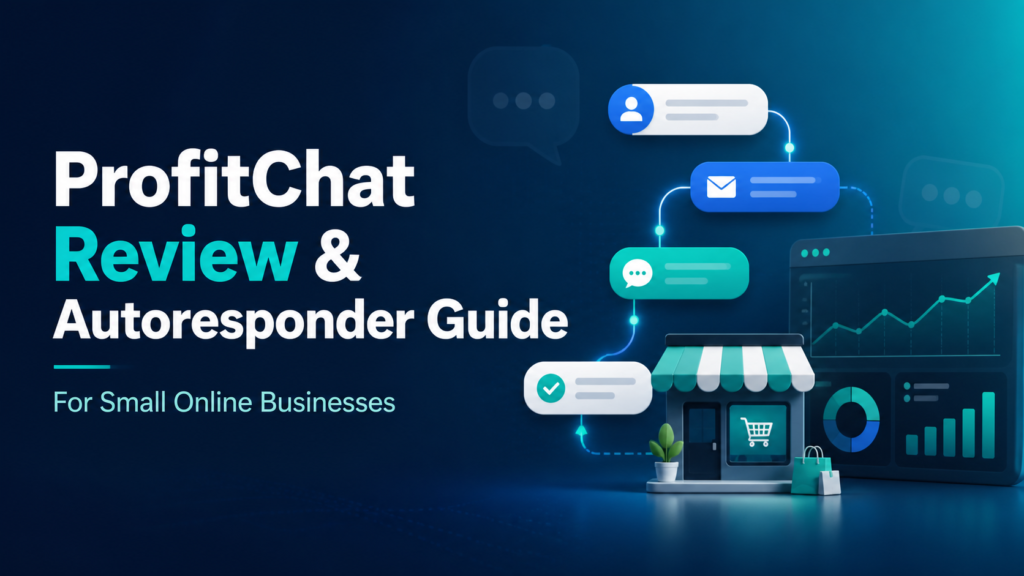
Managing customer messages across Facebook and Instagram can become time-consuming as an online business grows. ProfitChat is positioned as an AI-powered autoresponder designed to help marketers and small business owners automate conversations, respond to prospects, and promote online offers or eCommerce shops. This ProfitChat review examines what the platform claims to do, where chat automation may be useful, and what beginners should consider before adopting it.
What Is ProfitChat?
ProfitChat is marketed as a Facebook and Instagram autoresponder that uses AI to generate and deliver automated marketing messages. Its promotional language describes the software as a “sentient” autoresponder and emphasizes its connection to ChatGPT-style content generation.
The word “sentient” should be understood as marketing terminology rather than a claim that the software has human awareness. In practical terms, ProfitChat appears to combine chatbot technology, automated messaging, and AI-assisted response generation. The goal is to reduce the manual work involved in answering routine questions and following up with potential customers.
ProfitChat is also promoted as a way to market AI-created eCommerce shops. However, prospective users should confirm the current integrations, supported channels, usage limits, templates, and eCommerce features on the official sales page before purchasing. Software capabilities and platform policies can change. ManyAgents AI Review: A Practical Guide to 20 AI-Powered Marketing Agents
How an AI Autoresponder Can Support a Business
An autoresponder sends a predefined or AI-generated reply when a particular action occurs. For example, someone may comment on a Facebook post, send an Instagram direct message, or ask about a product. Instead of waiting for a business owner to respond manually, the chatbot can provide an immediate first reply.
This does not mean every conversation should be fully automated. Chat automation is most effective when it handles repetitive tasks while giving customers a clear route to human assistance.
Common Autoresponder Tasks
- Welcoming people who initiate a conversation.
- Answering frequently asked questions about products or services.
- Sharing product pages, store links, or lead magnets.
- Collecting contact information with the user’s permission.
- Directing complex questions to a human team member.
- Following up after a prospect requests more information.
These applications can support customer engagement and lead generation without requiring a business owner to monitor every conversation in real time.
ProfitChat Features to Evaluate
ProfitChat’s central proposition is the combination of social messaging automation and AI-generated content. When reviewing the platform, focus on how its practical tools fit your workflow rather than relying only on broad promotional claims.
Facebook and Instagram Messaging
ProfitChat is promoted primarily as an autoresponder for Facebook and Instagram. This may make it relevant to businesses that already receive questions, comments, or direct messages through those platforms. Confirm whether the software supports the exact type of interaction you want to automate, such as direct messages, comment responses, or follow-up sequences.
AI-Assisted Replies
An AI chatbot can help draft conversational responses more quickly than creating every message from scratch. Nevertheless, AI-generated text should be reviewed before it is deployed. Replies can occasionally be inaccurate, off-brand, or unsuitable for a sensitive customer issue.
Automated Product Promotion
The product is marketed as a tool for promoting AI-created eCommerce shops. A chatbot could introduce products, answer basic questions, and send interested users to an appropriate store page. The messages should remain relevant to the conversation and should not be used to send unsolicited promotions.
Lead Generation Workflows
Automated conversations can help qualify a prospect by asking simple questions. A service business might ask what type of support the visitor needs, while an online shop might ask which product category interests them. Any collection of names, email addresses, or other personal information should include clear consent and appropriate privacy practices.
Practical ProfitChat Autoresponder Guide
A successful setup starts with a simple customer journey. Avoid trying to automate every possible question on the first day. Begin with one common interaction, test it carefully, and expand only after the basic workflow is reliable.
Step 1: Choose One Business Objective
Decide what the automation should accomplish. A suitable initial objective might be answering delivery questions, distributing a free guide, recommending a product category, or directing users to a booking page.
Use a measurable operational goal rather than an unrealistic outcome. For example, aim to reduce repeated manual replies instead of expecting the software to guarantee sales or traffic.
Step 2: Map the Conversation
Write down the customer’s likely first message, the automated response, and the next available choices. Keep the flow short and make each option clear.
For example, an online stationery shop could use this sequence:
- The customer asks about planners.
- The chatbot asks whether the customer wants a daily, weekly, or undated planner.
- The customer selects a category.
- The chatbot shares the relevant collection page.
- The customer can request human assistance if needed.
This is more useful than sending the same generic promotional message to everyone.
Step 3: Create Clear, Accurate Messages
Use short sentences and make it obvious that the person is interacting with an automated assistant. Avoid exaggerated claims, artificial urgency, or messages that imply a product can guarantee income or business growth.
If ProfitChat generates a reply with AI, review product names, prices, delivery details, refund terms, and links. The business remains responsible for the information sent to customers.
Step 4: Add a Human Handoff
Include phrases such as “Talk to support,” “Ask a person,” or “Leave your email for a reply.” Automation should not trap a customer in an endless loop. Complaints, payment problems, refund requests, and unusual questions generally need human attention.
Step 5: Test Before Publishing
Run through every conversation path using a test account where possible. Check links, spelling, response timing, mobile readability, and what happens when a user types something unexpected.
Testing is especially important when AI-generated responses are enabled. Set boundaries around topics the chatbot should not answer and prepare a safe fallback message.
Step 6: Monitor and Improve
Review conversations regularly. Look for repeated questions that the current automation does not address, points where people stop responding, and messages that cause confusion. Update the flow based on genuine customer needs rather than adding more messages simply because automation makes it possible.
Using ProfitChat With Email Marketing
Customer messaging and email marketing can complement each other, but consent matters. A social media conversation should not automatically place someone on a promotional email list unless the person knowingly agrees to subscribe.
A compliant workflow might offer a useful checklist or discount in exchange for an email address, explain what the subscriber will receive, and provide an unsubscribe option in future emails. ProfitChat may help start this process, but users should verify its available integrations and configure them in line with applicable privacy and anti-spam rules.
Potential Advantages and Limitations
Potential Advantages
- May reduce time spent answering repetitive social media questions.
- Can provide an immediate first response outside normal working hours.
- May help organize product discovery and lead qualification.
- Combines AI content assistance with chat automation.
- Could be approachable for small businesses without a large support team.
Potential Limitations
- AI-generated messages still require review and supervision.
- Automated replies can feel impersonal if the conversation is poorly designed.
- Facebook and Instagram automation must comply with Meta’s current rules.
- Sending excessive or unsolicited messages can damage customer trust.
- Results depend on the offer, audience, message quality, and existing demand.
The claim that a system can blast out millions of marketing messages should be approached cautiously. Message volume is not the same as customer engagement. Responsible marketing prioritizes permission, relevance, platform compliance, and useful communication.
Who Might Consider ProfitChat?
ProfitChat may be worth examining for eCommerce sellers, affiliate marketers, digital product creators, service providers, and small business owners who actively use Facebook or Instagram for customer communication.
It may be less suitable for businesses that receive very few social messages, require highly specialized support, or are unwilling to monitor automated conversations. It is also not a replacement for a sound offer, reliable customer service, or a broader online marketing strategy.
ProfitChat Review: Final Verdict
ProfitChat presents an interesting approach to business automation by combining an AI chatbot with Facebook and Instagram customer messaging. Its strongest potential use is handling predictable conversations, directing interested users to relevant resources, and reducing repetitive manual work.
Its value will depend on the quality of its current features, how well it integrates with your workflow, and whether you use the automation responsibly. It should be treated as a marketing tool rather than a guaranteed source of leads, traffic, or sales.
If social messaging is already an important part of your business, you can review the current ProfitChat offer and product details here. Check the latest pricing, terms, support options, refund policy, and feature list before deciding. This is an affiliate link, which means the publisher may earn a commission if you purchase through it, at no additional cost to you.
Frequently Asked Questions
What is ProfitChat?
ProfitChat is marketed as an AI-powered Facebook and Instagram autoresponder. It is designed to automate selected customer conversations, generate replies, support lead generation, and direct users toward products or online offers.
Is ProfitChat really sentient?
No evidence suggests that ProfitChat has human consciousness or awareness. “Sentient” is promotional wording. The practical technology is better understood as AI-assisted chat automation that responds according to prompts, rules, and configured workflows.
Can ProfitChat guarantee leads or sales?
No marketing tool can guarantee leads, sales, traffic, or income. Outcomes depend on factors including audience demand, offer quality, message relevance, customer trust, setup, and follow-up.
Can beginners use an AI autoresponder?
Beginners can use an autoresponder if they start with a simple workflow, test every conversation path, and monitor the results. It is advisable to automate one repetitive task before building more complex sequences.
Is automated messaging allowed on Facebook and Instagram?
Automation may be allowed when it follows Meta’s current platform policies and applicable marketing laws. Users should avoid unsolicited or misleading messages, obtain appropriate consent, and review policy updates before launching campaigns.