Disclosure: This page may contain affiliate links. I may earn a commission at no extra cost to you if you purchase through one of these links.
Publishing a coordinated series on Amazon Kindle Direct Publishing can require extensive planning, writing, editing, cover design and metadata research. BookSeries AI aims to simplify that workflow by generating complete, ready-to-publish book series that include full-length manuscripts, matching covers, titles, blurbs and keywords. For beginners and small online business owners, this AI book series generator offers a way to organize several major publishing tasks in one place.
That convenience does not remove the publisher’s responsibility to review every book. AI-generated content can contain inaccuracies, repetition or language that needs improvement. The best way to approach BookSeries AI is as a production tool that can accelerate the early stages of publishing while leaving quality control, compliance and final decisions in human hands.
What Is BookSeries AI?
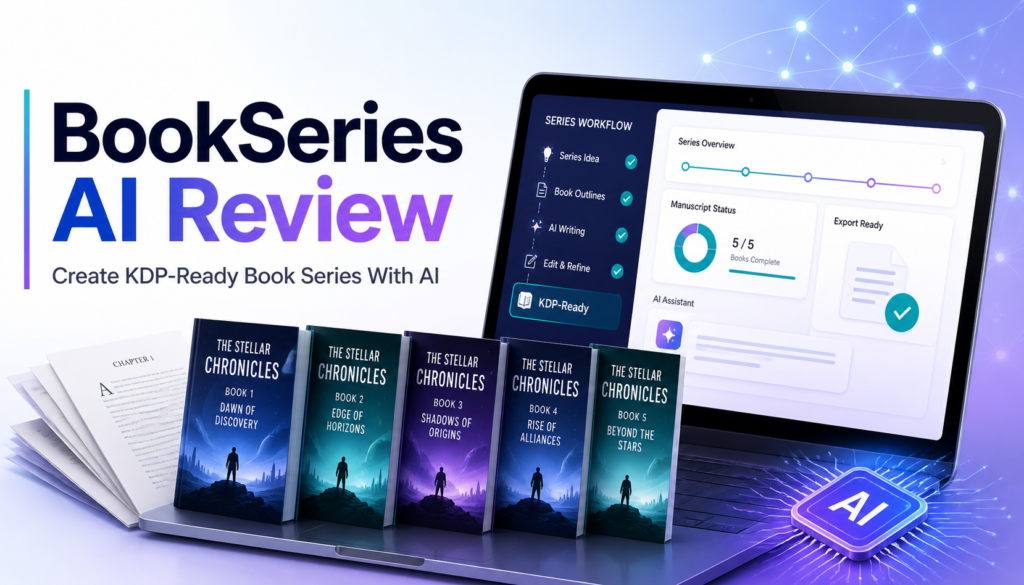
BookSeries AI is an AI publishing tool built specifically for creating book series intended for Amazon KDP. Rather than producing only a short outline or isolated passage, it is designed to assemble the main components needed for a coordinated series.
Its output includes full-length books, related titles, matching book covers, sales blurbs and keywords. The goal is to produce KDP-ready books that can move from generation to review and upload without requiring the user to coordinate several unrelated writing and design applications.
This series-based approach is an important distinction. A general AI book generator may help draft one manuscript, but a series also needs consistent positioning, recognizable visual branding and a logical relationship between individual volumes. BookSeries AI attempts to address those connected requirements as a single workflow. PuzzleLabs AI Review: A Complete Puzzle-Book Creation and Publishing Platform
What Does the Platform Create?
Full-Length Book Manuscripts
The central feature is the creation of full-length books rather than brief reports or simple outlines. This may reduce the time needed to develop a first draft, especially for publishers who already understand their chosen audience but need help organizing and expanding a topic.
Generated manuscripts should still receive a complete editorial review. Check facts, chapter order, originality, tone and readability. Remove unnecessary repetition, improve weak transitions and add useful examples where the material feels too general.
Coordinated Book Titles and Series Positioning
A good series needs titles that clearly communicate how each volume is different while showing that the books belong together. BookSeries AI generates titles as part of the overall package, which can help maintain a recognizable theme.
Before using any title, search Amazon and the wider web for similar books. You should also check for possible trademark conflicts and avoid wording that could confuse readers about the source or affiliation of your publication.
Matching Covers
Matching covers can give a series a more professional and consistent appearance. Repeated typography, layout choices and visual themes help readers recognize related volumes when browsing an Amazon product page.
Review each generated cover at thumbnail size because that is how many shoppers will first see it. Make sure the title and subtitle remain legible, the images accurately represent the subject and every visual element is licensed or generated for lawful commercial use.
Blurbs and Keywords
BookSeries AI also creates blurbs and keywords for the books it generates. A blurb should describe the reader, problem and practical value of the book without making exaggerated promises. Keywords should be relevant to the actual content rather than inserted simply because they appear popular.
Generated metadata is a useful starting point, not a guarantee of visibility or sales. Amazon discovery depends on many factors, including competition, reader response, relevance, pricing and the quality of the product page.
Who May Find BookSeries AI Useful?
This AI book generator may be useful for beginners who want a more structured route into self-publishing. It can also serve small online business owners who want to turn their existing expertise into an educational series.
Potential users include:
- New KDP publishers who need help organizing the components of a series.
- Bloggers who want to expand a group of related articles into longer publications.
- Consultants or service providers creating educational books around their field.
- Niche publishers testing ideas before investing in a larger production process.
- Creators who want consistent covers and positioning across several volumes.
It may be less suitable for anyone expecting a completely hands-off business. Uploading unreviewed AI output can create quality, accuracy and policy risks. Successful publishing still requires topic judgment, editing, differentiation and ongoing management.
Example of a Book Series Workflow
Consider a small business educator planning a series for first-time online shop owners. An illustrative three-book concept might include a beginner’s guide to choosing products, a second volume about writing product descriptions and a third focused on customer service systems.
An AI book series generator could help create connected drafts, titles, visual branding, blurbs and keyword ideas for all three volumes. The publisher would then verify business claims, add original worksheets, tailor examples to the target reader and edit each manuscript for consistency.
This approach is stronger than treating generated material as a finished commodity. The publisher brings subject knowledge and editorial judgment, while the tool handles part of the initial production workload.
How to Use BookSeries AI for Amazon KDP
Step 1: Define a Specific Reader
Begin with a clear audience rather than a broad topic. For example, “meal planning” is general, while “weekly meal planning for busy first-time parents” gives the series a more focused direction. Define what the reader already knows, what problem needs solving and what outcome each volume should support.
Step 2: Plan the Series Structure
Decide how the books relate to one another. A series can progress from beginner to advanced material, divide one subject into separate problems or address the needs of different reader groups. Each book should provide standalone value instead of functioning merely as an advertisement for the next volume.
Step 3: Generate the Publishing Assets
Use BookSeries AI to create the manuscripts and supporting assets. Keep a record of your topic, intended audience and series structure so that you can compare the resulting titles, covers and content against your original plan.
Step 4: Conduct a Manuscript Review
Read every chapter from beginning to end. Confirm factual statements using reliable sources, check that examples make sense and remove duplicated ideas. For specialist subjects such as health, law or finance, qualified professional review may be necessary.
You should also add genuine value through original frameworks, checklists, case scenarios or commentary. Human editing can make the material more specific, useful and aligned with reader expectations.
Step 5: Check Covers and Metadata
Compare the matching covers side by side. They should look related without becoming difficult to distinguish. Proofread every title, subtitle and blurb, and confirm that keywords accurately describe the contents.
Avoid unsupported claims such as guaranteed outcomes. Metadata should inform potential readers rather than manipulate them. Misleading descriptions can result in poor reader experiences even if they attract initial attention.
Step 6: Format and Preview the Books
Confirm that the files meet the current requirements for the KDP format you intend to publish. Inspect headings, page breaks, lists, margins, image placement and navigation. Use Amazon’s available preview process to examine the book before approving publication.
Step 7: Complete the KDP Setup Honestly
Follow Amazon KDP’s current content, rights and disclosure requirements. Platform rules can change, so review the latest official guidance instead of relying on an older tutorial. Answer any questions about AI-generated content accurately and make sure you possess the necessary rights to manuscripts, images, fonts and other assets.
Step 8: Order or Review a Final Copy
For print editions, review a proof copy when practical. Errors that are easy to miss on a computer screen may become obvious in print. For ebooks, test navigation and readability on more than one screen size if possible.
Benefits of a Series-Focused AI Publishing Tool
The main benefit is workflow consolidation. Producing books, covers and metadata together may be more efficient than starting each asset separately. A unified process can also make it easier to keep the series concept consistent.
Other potential advantages include faster first-draft creation, coordinated branding and a clearer path from an initial topic to several related products. These benefits can be meaningful for a small publisher with limited time or design resources.
However, efficiency should not be confused with guaranteed commercial performance. No AI publishing tool can promise sales, favorable reviews, rankings or income. Results depend on the idea, execution, competition, reader demand and publishing decisions.
Important Limitations and Responsible Use
AI-generated writing can sound confident while being incorrect. It may also repeat common information, produce inconsistent details or fail to understand subtle audience needs. Covers can contain awkward visual elements, and suggested keywords may be too broad or competitive.
There are also intellectual property and platform compliance considerations. Publishers should review the tool’s current terms, confirm permitted commercial usage and perform their own checks for potentially protected names, text or imagery. Amazon KDP remains responsible for deciding whether submitted content meets its policies.
Responsible use means treating the generated package as material to inspect and improve. Quality assurance is not an optional final step; it is part of the publishing process.
Is BookSeries AI Worth Considering?
BookSeries AI may be worth considering if you want an integrated way to build several related KDP books and are prepared to edit the output carefully. Its focus on complete series, matching covers, titles, blurbs and keywords makes it more specialized than a basic writing assistant.
The value will depend on your workflow. Before buying, review the current product page, pricing, terms, examples and refund conditions. Compare those details with the cost and time required to hire separate writers, designers and metadata specialists.
Affiliate disclosure: The following link is an affiliate link. If you purchase through it, the publisher of this article may receive a commission at no additional cost to you.
Visit the BookSeries AI website to review the current features and offer.
Conclusion
BookSeries AI combines manuscript generation with the additional elements needed to build a coordinated Amazon KDP series. By producing full-length books, matching covers, titles, blurbs and keywords, it can reduce the number of disconnected tasks involved in preparing a series.
Its output should nevertheless be treated as a starting point for professional publishing. Careful editing, fact-checking, rights verification, formatting and compliance checks remain essential. Used responsibly, this AI book series generator can support a more organized workflow without replacing the publisher’s judgment.
Frequently Asked Questions
What is BookSeries AI?
BookSeries AI is an AI publishing tool that creates complete book series for Amazon KDP, including full-length manuscripts, coordinated covers, titles, blurbs and keyword suggestions.
Does BookSeries AI create KDP-ready books?
It is designed to create books and supporting assets that are ready for the KDP publishing workflow. Publishers should still edit, fact-check, format, preview and confirm compliance before uploading any files.
Can beginners use an AI book series generator?
Yes, beginners may find the structured workflow helpful. They still need to learn Amazon KDP requirements, review the generated content and make responsible publishing decisions.
Does BookSeries AI guarantee Amazon sales?
No. An AI book generator cannot guarantee traffic, rankings, reviews, sales or income. Performance depends on demand, competition, content quality, presentation and other factors.
Can AI-generated books be published on Amazon KDP?
Amazon KDP has rules covering content, rights and AI-generated material. Publishers should consult Amazon’s current official policies, provide accurate disclosures where requested and ensure that every uploaded asset complies with the latest requirements.