Disclosure: This page may contain affiliate links. I may earn a commission at no extra cost to you if you purchase through one of these links.
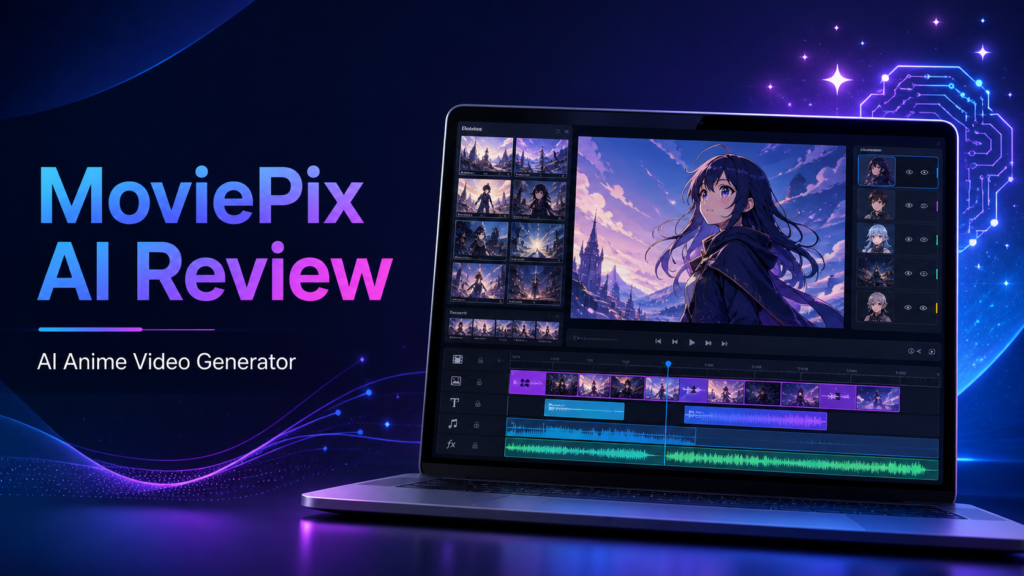
Creating an animated series traditionally requires scriptwriters, illustrators, animators, voice actors, editors, and a substantial production budget. MoviePix AI aims to simplify that process by giving creators an AI-powered way to turn ideas and prompts into animated video content. In this MoviePix AI review, we will examine its intended use cases, potential advantages, limitations, and the practical steps involved in using an AI anime video generator responsibly.
Affiliate disclosure: This article contains an affiliate link. If you purchase through that link, the publisher may receive a commission at no additional cost to you. This does not affect the assessment below.
What Is MoviePix AI?
MoviePix AI is promoted as an AI animated movie maker and storytelling platform for producing anime-style videos, cinematic scenes, and potentially longer episodic projects. Its central idea is straightforward: a user provides a prompt or story concept, and AI assists with turning that concept into visual content.
The software is positioned for people who want to create cartoons, anime stories, short films, social media videos, or recurring shows without learning a complete professional animation workflow. This may include beginners, small online business owners, affiliate marketers, educators, storytellers, and content creators.
MoviePix AI is also marketed around the possibility of creating shows in recognizable genres such as adult sitcoms, family cartoons, fantasy adventures, science fiction comedies, and action anime. References to famous programs such as The Simpsons, South Park, Family Guy, SpongeBob SquarePants, Rick and Morty, or Dragon Ball should be understood as examples of broad content formats—not permission to copy their characters, artwork, dialogue, branding, or distinctive worlds. SongVerse AI Review: World’s First AI App That Turns Any Idea, Keyword, Prompt or Script Into Songs
How the Text-to-Anime Video Concept Works
A text-to-anime video tool uses written instructions to guide AI-assisted content generation. Rather than drawing every frame manually, the creator describes the characters, setting, mood, camera angle, and action.
For example, a prompt might request a scene featuring an original young explorer entering a floating city during a thunderstorm. Additional instructions could define the color palette, emotional tone, lighting, pacing, and cinematic composition.
Clear prompts generally provide better creative direction than vague requests. An instruction such as “make an anime video” leaves many decisions unresolved. A more useful prompt would identify the protagonist, environment, action, visual mood, shot type, and purpose of the scene.
Example Prompt Structure
A practical prompt can follow this structure:
- Character: An original space mechanic wearing a patched orange flight suit.
- Setting: A busy repair station orbiting a blue gas giant.
- Action: The mechanic discovers a mysterious signal inside an abandoned robot.
- Mood: Curious, suspenseful, and adventurous.
- Visual direction: Cinematic anime scene with dramatic rim lighting and a slow camera push.
- Continuity details: Keep the character’s clothing, hairstyle, and equipment consistent.
This approach gives an AI storytelling tool more useful information while helping the creator retain control over the idea.
Who Might Use MoviePix AI?
MoviePix AI may appeal to creators who have story ideas but lack traditional animation experience. It could also be relevant to businesses that need visual storytelling assets without maintaining a full animation department.
YouTube and Social Media Creators
An anime content creator tool can support short episodes, character introductions, fictional trailers, vertical clips, or serialized stories. One longer narrative may also be repurposed into teasers, recaps, and short-form segments.
AI generation does not remove the need for a content strategy. Creators still need compelling hooks, understandable stories, thoughtful editing, suitable titles, and consistent publishing. No software can guarantee views, subscribers, engagement, or advertising revenue.
Small Businesses and Marketers
Businesses could use original animated scenes for brand stories, product explainers, fictional customer scenarios, or educational campaigns. A mascot-led series, for example, might make a complex topic easier to understand.
The animation should serve a clear business purpose rather than being added only for novelty. Creators should also confirm that their selected plan includes the commercial usage rights required for advertising, client work, or monetized channels.
Writers and Independent Storytellers
Writers may use an AI video creation platform to visualize scenes before investing in a larger production. A short concept trailer can help clarify a story’s atmosphere, character relationships, and pacing.
However, AI output should be treated as a draft that requires human judgment. Narrative structure, emotional depth, originality, and continuity still depend heavily on the creator.
How to Create Anime Videos With AI Using MoviePix AI
The exact interface and available features may change, but the following workflow provides a practical way to approach an AI animated project.
1. Start With a Simple Original Concept
Define the audience, genre, main character, central conflict, and intended video length. For a first project, use a small cast and one or two locations. This makes visual consistency and storytelling easier to manage.
2. Write a Short Scene Outline
Divide the story into a beginning, middle, and end. Each scene should have a clear purpose. A two-minute pilot might introduce the hero, reveal a problem, and end with an unanswered question.
3. Develop Original Characters
Document each character’s appearance, personality, clothing, motivations, and speaking style. Reuse those descriptions whenever the character appears. A basic character sheet can reduce accidental changes between scenes.
4. Turn the Outline Into Focused Prompts
Create one prompt for each shot or scene rather than trying to generate an entire complex episode from one broad instruction. Specify framing, action, lighting, setting, and emotion. Avoid using the names of copyrighted characters as shortcuts.
5. Generate and Review the Scenes
Check each result for visual errors, unwanted objects, inconsistent clothing, unnatural movement, and continuity problems. Regenerate weak scenes or revise the prompt when necessary. AI-generated footage should not be published without review.
6. Add the Human Production Layer
Edit the strongest scenes into a coherent sequence. Depending on the project and the tools available, this may include narration, dialogue, captions, sound effects, music, transitions, color adjustments, and branding.
Use only audio, images, fonts, and other assets that you created, licensed, or have permission to use.
7. Export, Publish, and Test
Export the video in a format suitable for the target platform. Review it on both desktop and mobile devices, and make sure dialogue and captions are understandable. After publishing, use legitimate audience feedback and platform analytics to improve later episodes.
Potential Benefits of MoviePix AI
The principal attraction is accessibility. An AI anime video generator can reduce the technical barrier between having an idea and producing a visual draft. It may allow a solo creator to experiment with concepts that would otherwise require several production specialists.
Prompt-based generation can also speed up early-stage ideation. Instead of spending weeks producing a polished pilot before testing the premise, a creator may be able to explore several visual directions and discard those that do not fit.
Another possible benefit is content versatility. Original animated footage can be adapted for story channels, social clips, advertisements, lesson materials, product demonstrations, and entertainment projects.
These advantages depend on the software’s current capabilities, output quality, usage limits, and licensing terms. Prospective buyers should review the latest product page and offer details before purchasing.
Important Limitations to Consider
AI animated video is not automatically production-ready. Generated scenes may contain inconsistent faces, altered clothing, awkward motion, background changes, unreadable text, or objects that appear and disappear. Complex action sequences can require multiple attempts.
Long-form continuity is another challenge. Creating an entire show involves more than producing attractive individual clips. Characters, environments, voices, plot points, and visual rules must remain consistent across episodes.
The “simple prompt” concept is appealing, but high-quality results often require detailed instructions, experimentation, selection, and editing. Similarly, monetization is not automatic or instantaneous. Eligibility depends on content quality, platform rules, audience interest, licensing, disclosure requirements, and the creator’s overall strategy.
Buyers should investigate generation limits, credit systems, export options, supported aspect ratios, watermarks, commercial rights, refund terms, upgrades, and ongoing costs. These details can affect whether MoviePix AI is suitable for frequent production.
Copyright, Originality, and Ethical Use
Creators should build original characters and worlds rather than reproducing protected entertainment properties. Asking AI to copy a famous show’s exact character designs, logos, dialogue, signature environments, or recognizable art direction can create legal and platform-related risks.
A safer approach is to borrow broad, unprotectable concepts such as “an animated family comedy,” “a surreal science-fiction adventure,” or “a martial arts fantasy.” Then develop distinct names, appearances, personalities, settings, and story rules.
Review the platform’s terms concerning commercial usage and ownership of outputs. If content uses synthetic voices or realistic depictions of people, consider consent, disclosure, and the relevant platform policies. Human review remains essential.
Is MoviePix AI Worth Considering?
MoviePix AI may be worth exploring for creators who want to turn prompts into anime videos without building every visual element manually. Its strongest potential use is as a production assistant for original concepts, prototypes, short scenes, and episodic experiments.
It is less suitable for anyone expecting one prompt to produce a flawless, legally safe, fully monetized series with no editing. The quality of the final project will still depend on the script, prompt design, creative direction, revision process, and publishing strategy.
Before buying, compare the current feature list and pricing with your intended output volume. Confirm that the plan supports your preferred video format and commercial goals.
Conclusion
MoviePix AI represents an increasingly accessible approach to AI-assisted animation. It gives beginners and small businesses a possible way to create cinematic anime scenes, visualize stories, and develop original animated content without following a completely manual production process.
The best results are likely to come from treating it as a creative tool rather than a substitute for creativity. Start with an original concept, write focused prompts, review every output, edit carefully, and respect intellectual property rights.
If that workflow matches your goals, you can visit the official MoviePix AI offer page here to review the latest features, demonstrations, pricing, license terms, and refund information before making a decision.
Frequently Asked Questions
What is MoviePix AI used for?
MoviePix AI is positioned as an AI storytelling and animated video creation tool. It is intended to help users transform written ideas into anime-style scenes, short videos, cinematic sequences, and potentially episodic content.
Can MoviePix AI create an entire animated show?
It may assist with creating scenes and episode assets, but a complete show still requires planning, scripting, continuity management, editing, audio, and quality control. Users should review current demonstrations to judge whether the output meets their needs.
Can beginners use an AI anime video generator?
Prompt-based tools are generally designed to lower technical barriers. Beginners should start with short scenes, simple character descriptions, and focused prompts before attempting longer episodes.
Can MoviePix AI videos be monetized?
Monetization depends on the current commercial license, the originality of the content, and the rules of the publishing platform. Buying software does not guarantee approval, traffic, views, or revenue. Check the applicable terms before publishing commercially.
Can users create shows based on famous cartoons or anime?
Creators can explore broad genres such as animated sitcoms, underwater adventures, science-fiction comedy, or action fantasy. They should not copy protected characters, branding, dialogue, story worlds, or distinctive visual elements from existing properties.